

Saudi Arabia’s construction industry continues to gain remarkable momentum, with data revealing a robust 4.6% year-on-year increase in output during the first half of 2024. According to Knight Frank’s Saudi Arabia Construction Landscape Review, the total value of construction output—including sectors such as transport, power, oil & gas, water, industrial, and chemicals—surged to $148 billion in H1 2024. This growth trajectory has been consistent since 2020, reflecting the Kingdom’s steadfast commitment to transforming its economy through its ambitious Vision 2030 blueprint.
Sustained Growth Rooted in Vision 2030
The scale of ongoing development in the Kingdom is unparalleled. Since 2020, Saudi Arabia has awarded over $215.4 billion in construction contracts, with projections estimating a staggering $1.3 trillion in total real estate and infrastructure investment by 2030. These investments are not just numbers—they are blueprints for the future of Saudi Arabia as a global trade and economic hub.
Faisal Durrani, Partner and Head of Research (MENA) at Knight Frank, notes:
“The sheer magnitude of construction activity highlights the government’s determination to position Saudi Arabia as the epicentre of commerce, innovation, and tourism not only in the Gulf but globally.”
Vision 2030 aims to deliver over:
- 1 million homes
- 362,000 hotel keys
- 7.4 million square metres of retail space
- 7.7 million square metres of office space
These targets underscore the scale and strategic vision driving the Kingdom’s transformation.
Riyadh: The Powerhouse of Saudi Construction
At the heart of this construction boom lies Riyadh, the capital city, accounting for the lion’s share of awarded contracts. Since 2020, Riyadh has secured $135.2 billion worth of construction deals—63% of the Kingdom’s total. This aligns with the city’s bold $195 billion development plan, which includes:
- 4.6 million sqm of office space
- 2.6 million sqm of retail developments
- Over 28,800 hotel rooms
- More than 340,000 housing units
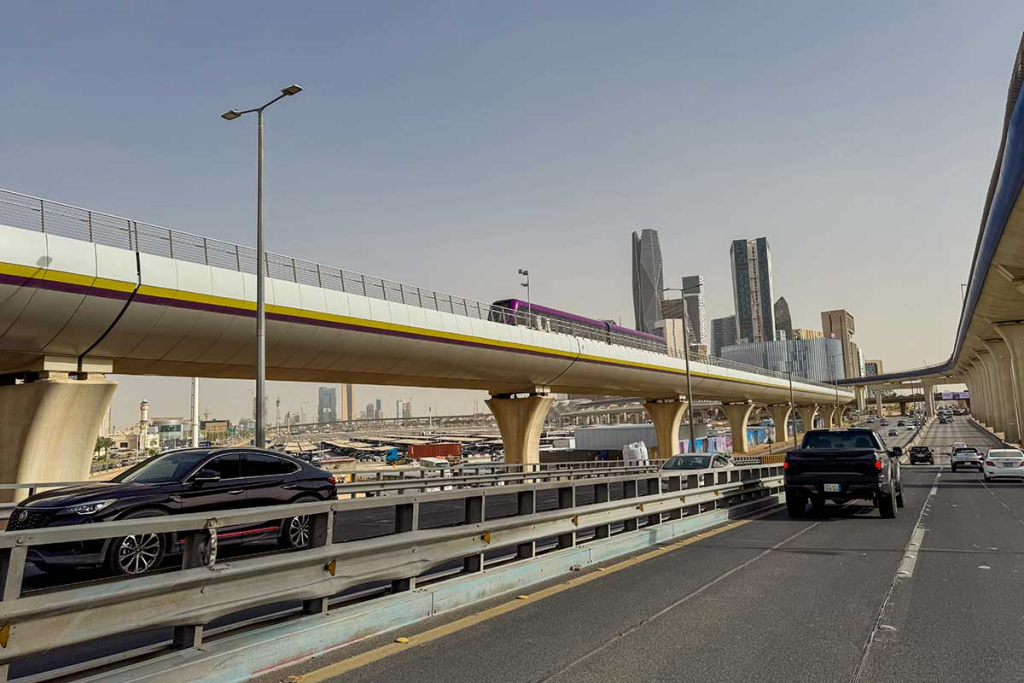
The city’s transformation is not limited to real estate. Transport infrastructure is a top priority, receiving nearly 29% of total construction contracts awarded in Riyadh. Key projects include:
- Riyadh Metro: A $22.5 billion mega project featuring six metro lines, 85 stations, and a fully automated, driverless system spanning 176 km.
- King Abdulaziz Public Transport Project: Establishing an advanced bus rapid transit system across the capital.
- Road development: Over $5 billion allocated to major road upgrades to accommodate the city’s expansion.
With Riyadh’s population expected to grow to 10 million by 2030, these infrastructure upgrades are essential. Mohamed Nabil, Regional Partner – Head of Project and Development Services (MENA), emphasized:
“The capital’s transport upgrade programme is one of the world’s most ambitious. While cars remain dominant today, Riyadh is investing in sustainable transport to redefine the urban experience and bolster its appeal for residents, tourists, and global businesses.”
Giga Projects Reshape the Kingdom’s Urban Landscape
While Riyadh may be the epicenter, giga projects across the Kingdom are playing a pivotal role in Saudi Arabia’s construction surge.
New Murabba – A $50 Billion Urban Marvel
One of the most anticipated developments, the New Murabba project, aims to transform 19 square kilometres in northwest Riyadh into a futuristic urban centre. It will include:
- 18 new residential neighbourhoods
- Cultural, commercial, and entertainment zones
- The Mukaab, an iconic cubed skyscraper billed as one of the world’s largest immersive destination experiences
New Murabba is designed to be the model of modern urban living, blending smart city technologies with sustainable design principles.
Western Region Transformation – $685.5 Billion Real Estate Pipeline
In the Western region, including NEOM and The Red Sea Project, Saudi Arabia is set to invest $685.5 billion into real estate and infrastructure. These developments will add:
- 382,000 new homes
- 330,000 hotel rooms
- Over 7.3 million sqm of office and retail space
According to Amar Hussain, Associate Partner – Research, Middle East:
“These giga projects are unprecedented in scale and ambition. Nothing across the EMEA region rivals what Saudi Arabia is delivering. These initiatives are not just redefining skylines—they are reshaping how people live, work, and experience urban environments.”
The Broader Impact: Economic Diversification and Private Sector Growth
Beyond the concrete and steel, Saudi Arabia’s construction boom is a powerful indicator of economic diversification. By reducing dependence on oil and emphasizing sectors like tourism, logistics, and digital infrastructure, the Kingdom is laying the groundwork for long-term economic resilience.
Key benefits emerging from this surge include:
- Job creation across engineering, construction, and technology sectors
- Boosted private sector participation, especially in hospitality, retail, and services
- Enhanced global competitiveness, drawing in international investors, real estate developers, and construction firms
Saudi Arabia is not just building cities—it is building a new national identity centred on innovation, sustainability, and inclusivity.
A Future-Built Nation
The figures from Knight Frank reflect more than progress—they illustrate a redefined ambition. With consistent year-on-year growth in construction since 2020 and a projected pipeline exceeding $1.3 trillion, Saudi Arabia is strategically investing in its future. Whether through Riyadh’s metro revolution, the digital smart cities of NEOM, or the coastal luxury resorts of the Red Sea, the Kingdom is sending a clear message:
The future is being built now—and it’s being built in Saudi Arabia.
For developers, investors, and global businesses, the Saudi construction sector presents unmatched opportunities across sectors. As the nation propels toward 2030, the question is not whether Saudi Arabia will meet its goals—but how quickly it will exceed them.